Need storm & hail damage roof repair services in Pevely?
Tell us about your roof and where you are. Ask for an estimate and a local provider in our network will follow up with next steps.
No obligation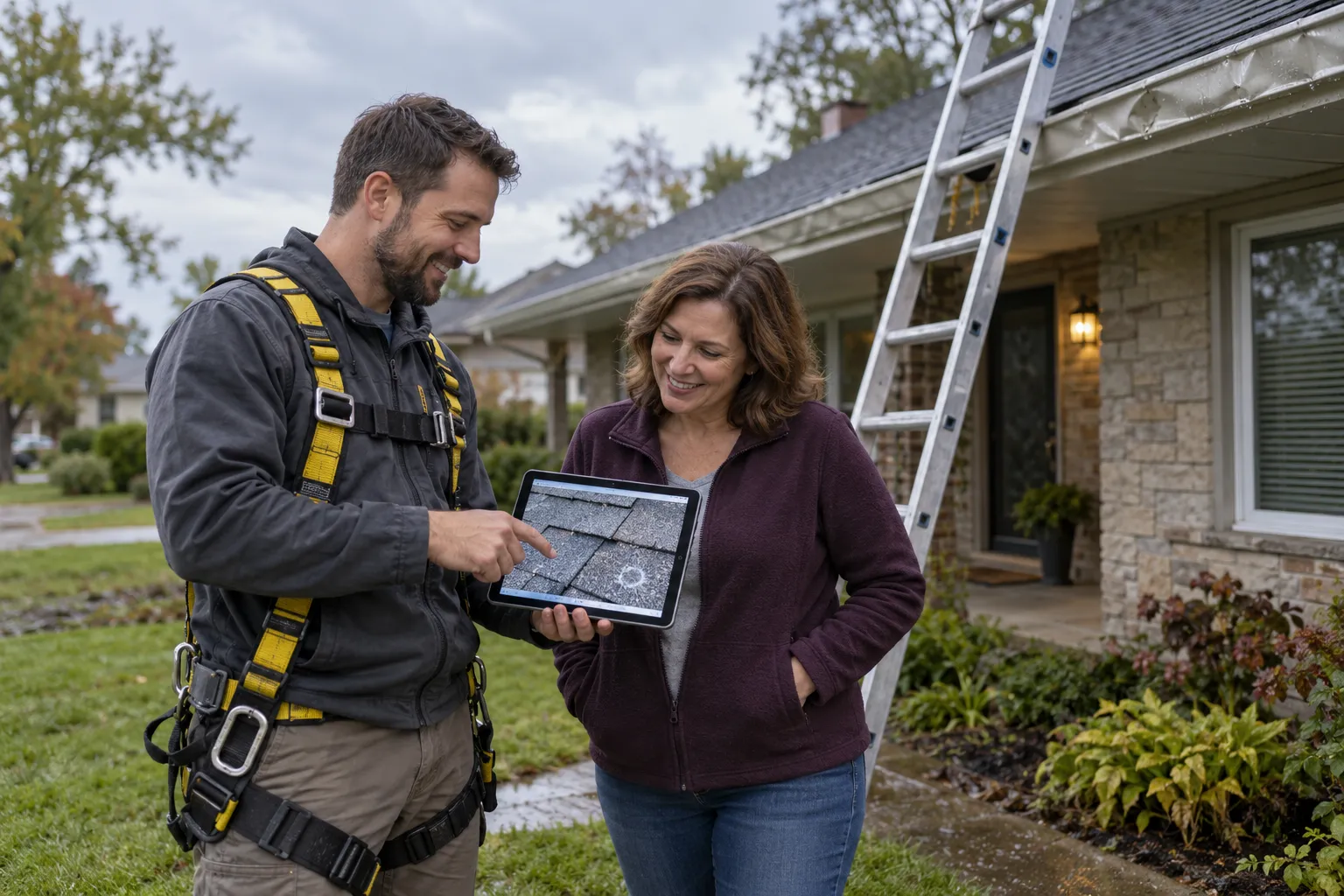
Storm damage on a roof is often hidden. Hail bruises shingles without leaving holes. Wind lifts tabs and breaks the seal beneath them. Water then finds the gap and works its way into the attic, the walls and the ceilings below.
Golfpc Roofing is a referral service. It does not do roofing. It connects homeowners in the Pevely area with independent local roofing contractors who inspect storm damage, explain what they find and quote the work in writing. Some jobs need a repair. Many hail jobs need a full replacement. A provider can tell you which, with photos to back it up. You can request an estimate with no obligation.
Stay off the roof. Wet shingles, loose granules and weak decking cause falls. The first look happens from the yard.
Walk the property. Check the grass for shingle pieces. Look for dented gutters, dinged vents and cracked siding. Step inside and scan the ceilings for new stains. Take dated photos of everything.
Here is the line between homeowner tasks and crew work.
Providers use harnesses, roof jacks and fall protection. You use a camera. That split keeps you safe and keeps the evidence clean.
Hail bruises shingles. A bruise is a spot where the gritty top layer, called granules, is knocked loose and the mat underneath cracks. Wind lifts and creases tabs. Falling limbs puncture decking, which is the board layer under the shingles. Heavy rain exploits every gap.
Severe thunderstorms can deliver all four in one night. Cold winters make it worse. Water in a crack turns to ice, expands and widens the opening.
Once the outer shell breaks, water gets in. It soaks insulation, stains ceilings and feeds mold. Humid summers speed that up. Spring flooding and a sump pump protect the basement, but only the roof protects everything above it.
Insurers also set filing deadlines. Policies differ, so check yours early. When a storm hits a whole neighborhood, schedules fill up. Many providers can respond quickly, but availability varies. Request a callback to check provider availability.
Emergency roof repair usually means a tarp or temporary seal. It keeps water out until the real work is scheduled. It is not a fix.
Ask the provider to note in writing what was done and what is still open. Keep the receipt. Insurers often ask for it.
A proper storm inspection checks more than shingles.
Expect photos and a written report. If the provider shows you nothing, ask again.
Replace, don't patch, when damage is spread out. A few lost shingles on one slope can often be repaired. Hail is different. Bruises usually cover every slope, and shingles that look fine can still leak next season.
Hail damage roof replacement is common for three reasons: widespread bruising, an older roof, and brittle shingles that will not take a patch. The provider should explain which case you have.
A patched hail roof can pass a quick glance. A buyer's inspector will not miss it. Hidden bruises and wet decking lower buyer confidence and can stall a sale.
A complete job keeps framing dry and the paperwork clean. Save the inspection report, the invoice and the warranty papers. They help at resale.
Some policies may cover sudden storm damage. Check yours for the deductible, wind and hail terms, and filing deadlines. Providers can often help document damage for a claim.
Your insurer decides coverage. Neither the provider nor Golfpc Roofing can promise a result.
After a big storm, crews from out of town knock on doors. Some are fine. Many are not. Verify before you sign.
Local roofing contractors are easier to find again if something goes wrong.
Quote in writing. Compare at least two. Choose clarity over speed.
Golfpc Roofing sorts the request, then connects you with independent providers in the Pevely area. It does no roofing itself. The provider inspects, quotes and does the work. You decide.
A provider checks shingles, flashing, decking and attic for hail bruises, wind lift and moisture.
Dated photos and notes that show what was found.
Tarps or patches that keep rain out until permanent work starts.
Scope, materials and price on paper, covering repair or full replacement as needed.
Prices vary by roof size, pitch, materials and local rates. These are typical U.S. ranges only. Hail jobs often cost more when decking is damaged. Always get a written quote before work starts.
| Item | Typical range | Notes |
|---|---|---|
| Storm damage inspection | $150 – $500 | Often credited toward the job |
| Emergency tarping | $300 – $1,500 | Temporary; size and access matter |
| Minor shingle repair | $300 – $1,500 | Limited to a small area |
| Flashing or vent repair | $200 – $1,000 | Depends on how many points are damaged |
| Decking replacement | $70 – $150 per sheet | Found once shingles are removed |
| Full asphalt roof replacement | $8,000 – $20,000 | Common after widespread hail damage |
Photograph damage from the yard and attic. Do not climb onto a storm-hit roof.
Request a callback or use the form. Describe the storm and what you see.
A local provider checks the roof and explains repair or replacement.
Compare written quotes, check your policy, and pick the provider you trust.
Independent local roofing contractors know regional storms, building codes and typical house styles.
Your request is sorted first, so providers see what the damage is before they call.
Ask each provider for scope, materials and price on paper so you can compare.
Requesting an estimate commits you to nothing. You choose whether to hire anyone.
Tell us about your roof and where you are. Ask for an estimate and a local provider in our network will follow up with next steps.
No obligationLook for dented gutters, dinged vents, and granules in downspouts. Bruised shingles are hard to see from the ground. A provider can inspect the roof and show you photos of any damage.
No. Wet or damaged roofs are slippery and may not hold your weight. Take photos from the ground and the attic, and leave roof access to a trained crew with fall protection.
Some policies may cover sudden storm damage, but terms and deductibles vary. Check your policy and file on time. Providers can often help document damage for a claim. Your insurer makes the final decision.
Tell us about your roof and where you are. Ask for an estimate and a local provider in our network will follow up with next steps.
No obligation