Need roof repair in Pevely?
Tell us about your roof and where you are. Ask for an estimate and a local provider in our network will follow up with next steps.
No obligation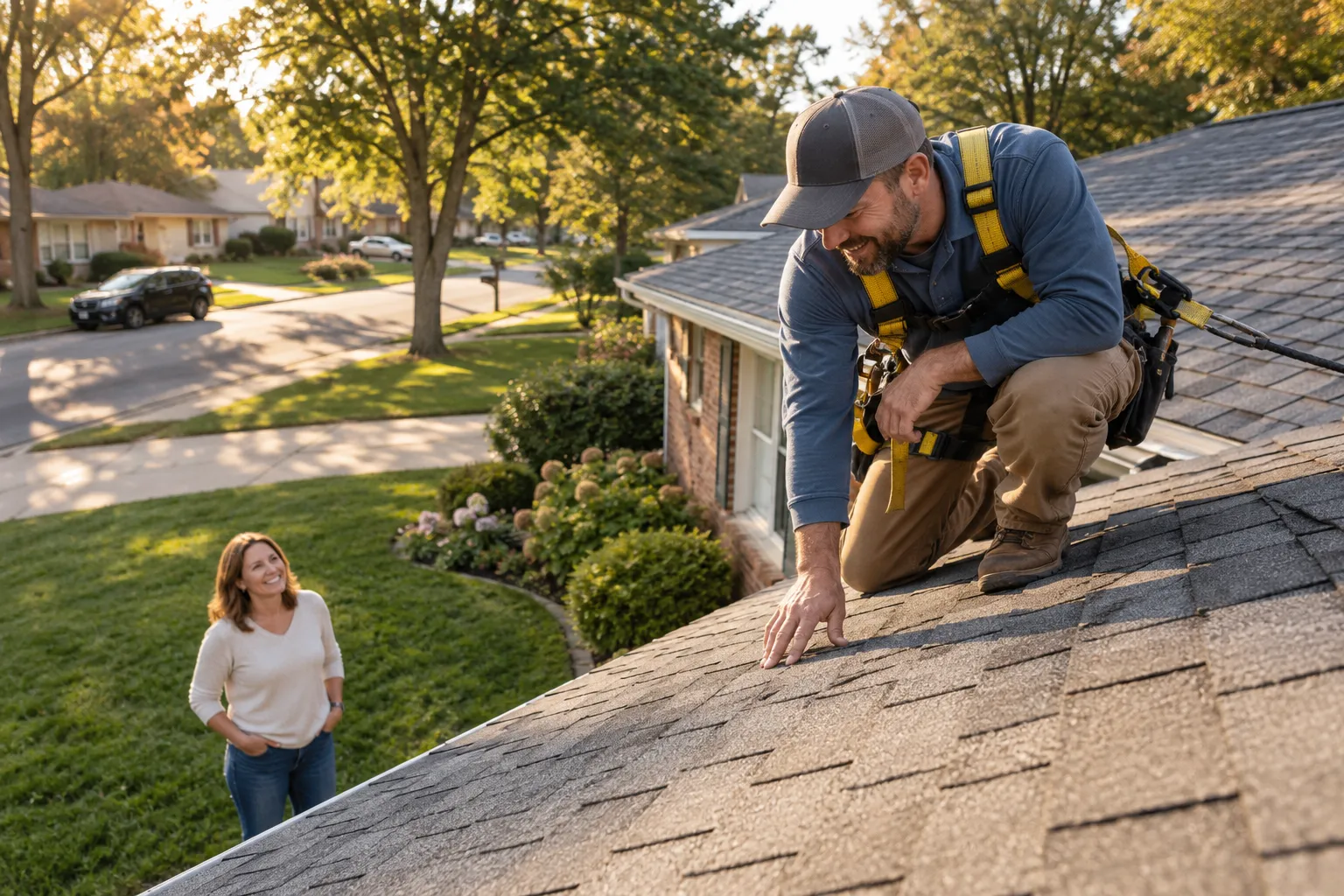
A roof problem rarely stays small. A cracked boot, a lifted shingle or a failed flashing joint lets water reach the decking, the insulation and the ceiling below. This page explains how roof repairs work, what a roofer looks for, and how to tell a sound patch from a waste of money.
Golfpc Roofing is a referral service. It does not do roofing work. It helps homeowners in the Pevely area sort the job, then connects them with independent local providers. Because patches on a worn roof tend to fail, Golfpc Roofing focuses on roofs that are ready for replacement. The sections below cover the safe steps you can take yourself and the point where a trained crew is required.
A ceiling stain. A drip in the attic. Shingles in the yard. Each one means water has found a way in. Work in this order: protect the room, limit the water, then get a written assessment.
If water is coming in now, treat it as emergency roof repair. Move valuables, set out a bucket and stay clear of any sagging ceiling. Request a callback to check provider availability.
Some tasks are safe from the ground. Others are not. Roofs are steep, slick and unforgiving, and falls cause serious injuries every year.
From the ground you can inspect with binoculars, clear gutters and walk the yard for loose shingles. Anything that needs a ladder, a harness or your weight on the roof belongs to a trained crew.
Water spreads sideways before it drips. It soaks the underlayment (the moisture barrier under the shingles), then the decking (the wood panels below), then the insulation. By the time a stain appears, the wet area is usually wider than the stain.
Local weather adds stress. Deep frost cycles pry open small cracks. Hot, humid summers turn damp attics into mold risks.
The wet spot inside is rarely under the hole outside. Water runs along rafters before it falls. A roofer starts in the attic and traces stains uphill.
Then comes the roof surface: lifted shingles, cracked flashing, bare nails. Some roofers run a hose test, wetting one section at a time. Ask what was found, and ask for photos.
Walking the roof, lifting shingles, flashing work and decking repair all need trained hands. So does any roof near power lines or with a steep pitch. Crews carry fall protection and know how to work without damaging the shingles around the repair.
Cold shingles also crack under a boot. That turns one leak into two.
A tarp is the usual short-term cover. It must run over the ridge and be anchored with wood strips, not nailed through the middle. Putting one up means roof access, so most homeowners should leave it to a crew.
Roofing sealant can close a hairline crack for a short time. Treat every temporary fix as a bridge to a proper repair or a replacement.
Repair suits a roof with a few damaged spots and sound material around them. Replacement makes sense when you see:
If repair bills keep arriving, the money is going into patches.
A patch on a worn roof often fails a few feet from the last one. A replacement resets the whole system.
Golfpc Roofing handles that second case. When a roof is past patching, it connects you with independent providers who can quote a replacement. Get the quote in writing.
Severe thunderstorms and hail bruise shingles and loosen the granules that protect them. Spread across the whole roof, that damage points to hail damage roof replacement rather than spot fixes.
Some policies may cover sudden storm damage repair, so check your policy. Providers can often help document damage for a claim.
Asphalt shingles are the simplest to repair. Metal roofs usually need fastener or seam work. Low-slope sections can pond water at the seams.
Bungalows and ranch homes have broad, low roofs. Wear tends to spread evenly across them. Older frame houses may have layered roofing and tired decking underneath, which can turn a small repair into a larger job.
Buyers and inspectors check the roof early. Documented, properly done work supports resale. Hidden rot and a patchwork surface do the opposite. Keep invoices and photos.
Local roofing contractors know frost depth, snow load and local code. Ask each one for:
Be careful with large upfront deposits and pressure to sign on the spot.
Tell Golfpc Roofing about the roof. The job is sorted, then matched with a provider in the network. The provider inspects and quotes. You decide, with no obligation.
A provider traces stains from the attic to the roof surface and explains what failed.
A written list of what can be fixed and what cannot.
Honest guidance on whether the roof is worth repairing or has reached replacement age.
Materials, labor and cleanup are listed in writing so you can compare local providers side by side.
Repair prices vary with roof pitch, material, access and how far water has spread. These are typical U.S. ranges only. Always get a written quote from the provider before work begins.
| Repair item | Typical range | Notes |
|---|---|---|
| Replace a few shingles | $150 – $500 | Matching older shingles can add cost |
| Pipe boot replacement | $150 – $450 | Common source of small leaks |
| Flashing repair | $250 – $900 | Chimney flashing sits at the higher end |
| Decking patch | $300 – $1,200 | Depends on the area of rotted wood |
| Tarp installation | $250 – $1,000 | Temporary; roof size and pitch matter |
| Larger leak repair | $500 – $2,500 | Past this, compare with replacement |
Say where water shows, when it leaks and how old the roof is. Photos help.
The job is sorted as a repair or a replacement so the right provider is matched.
An independent provider checks the roof and the attic.
Compare the written quote and decide without pressure or obligation.
Your job is sorted first, so you know whether it is a repair or a replacement.
Independent providers in the network know local frost, hail and snow conditions.
Golfpc Roofing refers. The provider does the work and issues the written quote.
Compare quotes at your own pace and decide when you are ready.
Tell us about your roof and where you are. Ask for an estimate and a local provider in our network will follow up with next steps.
No obligationLook at the pattern. A few damaged spots on an otherwise sound roof suggest repair. Leaks in several places, curling shingles, granules in the gutters or a roof around 20 years old point to replacement. A provider can confirm in writing.
From the ground you can document damage, clear gutters and contain water inside. Work on the roof itself is risky. Wet, steep surfaces cause falls, and a poor patch can hide damage. Leave roof access to a trained crew.
Some policies may cover sudden damage, such as a storm. Wear and age are usually excluded. Check your policy, and ask a provider to help document the damage.
Tell us about your roof and where you are. Ask for an estimate and a local provider in our network will follow up with next steps.
No obligation